
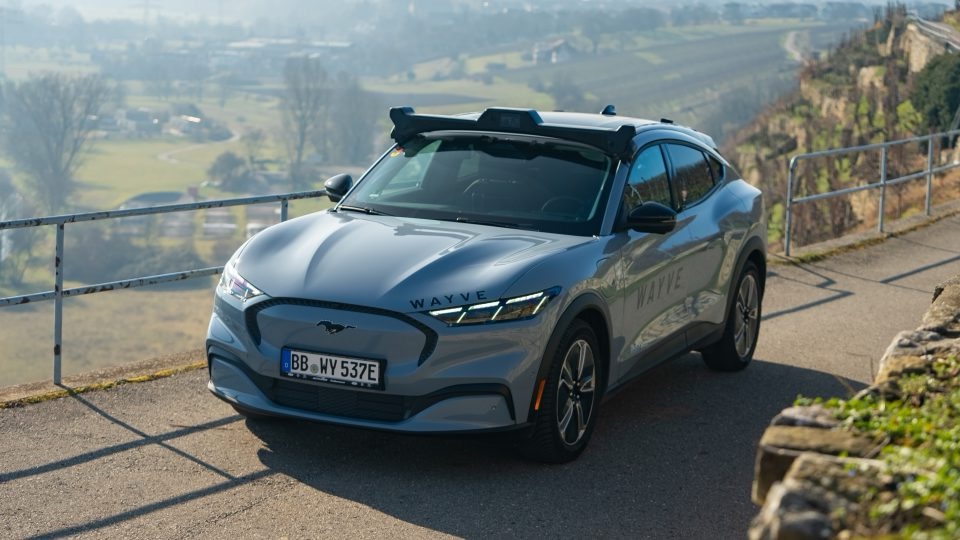
London-based autonomous driving startup Wayve has secured a massive $1.2 billion investment round backed by industry giants including Nvidia and Uber, along with three global automakers. This funding marks a pivotal moment for the UK tech ecosystem and positions Wayve as a serious global contender in the race toward scalable autonomous mobility.
What Makes Wayve Different?
Unlike traditional autonomous vehicle companies that rely heavily on HD maps and rule-based systems, Wayve takes a radically different approach. The company focuses on end-to-end AI, meaning its vehicles learn to drive using large-scale machine learning models trained on real-world data.
This AI-first strategy reduces dependency on expensive pre-mapped environments, potentially enabling faster and more scalable deployment across cities worldwide.
Why Nvidia and Uber Are Backing It
Nvidia has been aggressively expanding its presence in the autonomous driving sector through its AI chips and Drive platform. Investing in Wayve aligns with Nvidia’s long-term vision of AI-powered mobility.
Meanwhile, Uber sees autonomous technology as central to its future business model. Partnering with an AI-native company like Wayve could accelerate the deployment of self-driving ride-hailing fleets, reducing operational costs and increasing efficiency.
Scaling Beyond the UK
With $1.2 billion in fresh capital, Wayve plans to:
– Expand AI model training at scale
– Increase global testing operations
– Deepen partnerships with automakers
– Accelerate commercialization of its autonomous driving software
The involvement of major automakers signals confidence in Wayve’s software-centric approach. Rather than building its own cars, Wayve focuses on embedding its AI stack into existing vehicle platforms.
A Big Win for the UK Tech Scene
This funding round is also significant for the UK startup ecosystem. It demonstrates that Europe can produce globally competitive AI companies in deep-tech sectors traditionally dominated by US and Chinese firms.
As the autonomous vehicle industry moves from hype to practical deployment, Wayve’s AI-driven model could redefine how self-driving systems are developed and scaled.
Final Thoughts
The $1.2 billion raise isn’t just another funding headline. It signals a broader shift toward AI-native autonomous systems that prioritize adaptability and scalability over rigid mapping frameworks.
If Wayve’s approach proves successful at commercial scale, this could mark a major turning point in the global race toward fully autonomous transportation.
Related posts:
 Meta–Nvidia AI Deal Explained (2026): Billions, Blackwell GPUs & Meta’s AI Future
 Nvidia’s Big Bet on India: The $2 Billion AI Investment and What It Means
 Nvidia Delivered Incredible Quarterly Results — But Why Did the Stock Slip?
 How Elon Musk Pushed Technology a Decade Ahead
 India’s AI Boom: World’s Fastest-Growing AI Consumer — But Are We Building or Just Using?
 Sundar Pichai Meets Narendra Modi: What the February 18, 2026 Meeting Means for India’s AI and Tech Future
 Anthropic AI Shock: Why Indian IT Stocks Crashed
 SpaceX’s Potential IPO: The Dawn of a Trillion-Dollar Space Era?
Claude in Crisis? Mexico Flags Major AI Data Concerns
SpaceX’s Potential IPO: The Dawn of a Trillion-Dollar Space Era?
Claude in Crisis? Mexico Flags Major AI Data Concerns
 Bitcoin Bleeds as War Fears Rise — Panic Drop or Generational Opportunity?