
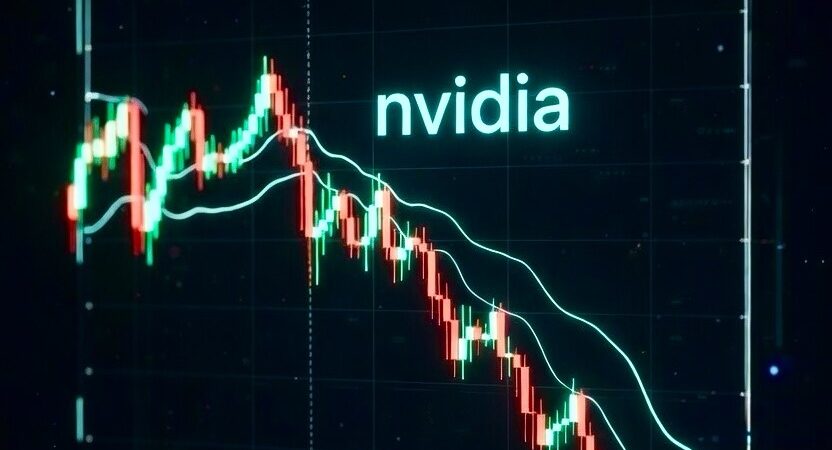
Nvidia once again posted blockbuster quarterly earnings, reinforcing its dominance in the AI chip industry. The company delivered record-breaking revenue, strong profit growth, and optimistic guidance — yet the stock reaction surprised investors.
Despite the impressive numbers, shares slipped after the announcement. Here’s what happened and why.
📈 Record-Breaking Quarterly Performance
Nvidia reported record quarterly revenue of approximately $68 billion, significantly beating Wall Street expectations. Adjusted earnings per share also came in above analyst estimates, reflecting strong operational performance.
The Data Center segment, powered by surging demand for AI infrastructure and GPUs, continued to be the company’s primary growth engine. Year-over-year growth remained exceptionally strong, driven by hyperscalers, enterprises, and global AI adoption.
CEO Jensen Huang highlighted continued momentum in AI computing, calling this period a major inflection point for next-generation artificial intelligence systems.
On paper, the quarter looked nearly flawless.
📉 So Why Did the Stock Fall?
Even with stellar results, Nvidia’s stock slipped shortly after earnings. Here’s why:
1️⃣ Sky-High Expectations
Investors had already priced in extraordinary growth. When a stock trades at premium valuations, even excellent results may not be “good enough” to push it higher. In short: the market expected perfection — and perhaps even more.
2️⃣ AI Valuation Concerns
There’s growing debate about whether AI-related stocks have run too far, too fast. Some investors worry about sustainability of demand and long-term margins. Even though Nvidia continues to lead the space, broader AI sentiment affected the stock.
3️⃣ Profit-Taking After a Massive Run
Nvidia shares have seen enormous gains over the past year. After such a rally, some investors likely locked in profits following earnings — a common pattern after major announcements.
4️⃣ Capital Allocation Questions
While Nvidia generates massive cash flow, some analysts noted that shareholder returns (buybacks/dividends) did not significantly accelerate. In high-growth phases, companies often reinvest — but income-focused investors sometimes prefer stronger cash returns.
🧠 Bigger Picture
The dip doesn’t necessarily reflect weakness in Nvidia’s business. Instead, it highlights how markets react when expectations are extremely elevated.
Nvidia remains at the center of the global AI boom. Demand for advanced GPUs and AI infrastructure continues to grow across industries. However, when valuations are stretched, stock price movements become more sensitive to sentiment than fundamentals.
📊 Final Thoughts
✔️ Revenue: Record-breaking
✔️ Earnings: Beat expectations
✔️ AI demand: Still surging
📉 Stock reaction: Pulled back due to expectations and sentiment
Nvidia delivered an incredible quarter — but on Wall Street, sometimes “great” isn’t enough when investors are expecting “extraordinary.”
Related posts:
 Meta–Nvidia AI Deal Explained (2026): Billions, Blackwell GPUs & Meta’s AI Future
 Nvidia’s Big Bet on India: The $2 Billion AI Investment and What It Means
 Anthropic AI Shock: Why Indian IT Stocks Crashed
 India’s AI Boom: World’s Fastest-Growing AI Consumer — But Are We Building or Just Using?
 Will Gold and Silver Surge as Iran–Israel Tensions Intensify?
 SpaceX’s Potential IPO: The Dawn of a Trillion-Dollar Space Era?
 Bitcoin Bleeds as War Fears Rise — Panic Drop or Generational Opportunity?
Nvidia Backs Wayve in $1.2 Billion AI Self-Driving Push
The Strait of Hormuz Crisis: How a Geopolitical Flashpoint Is Shaking Global Financial Markets
Bitcoin Bleeds as War Fears Rise — Panic Drop or Generational Opportunity?
Nvidia Backs Wayve in $1.2 Billion AI Self-Driving Push
The Strait of Hormuz Crisis: How a Geopolitical Flashpoint Is Shaking Global Financial Markets
 Will SSD and RAM Prices Come Back to Normal? Full Market Breakdown