

Introduction
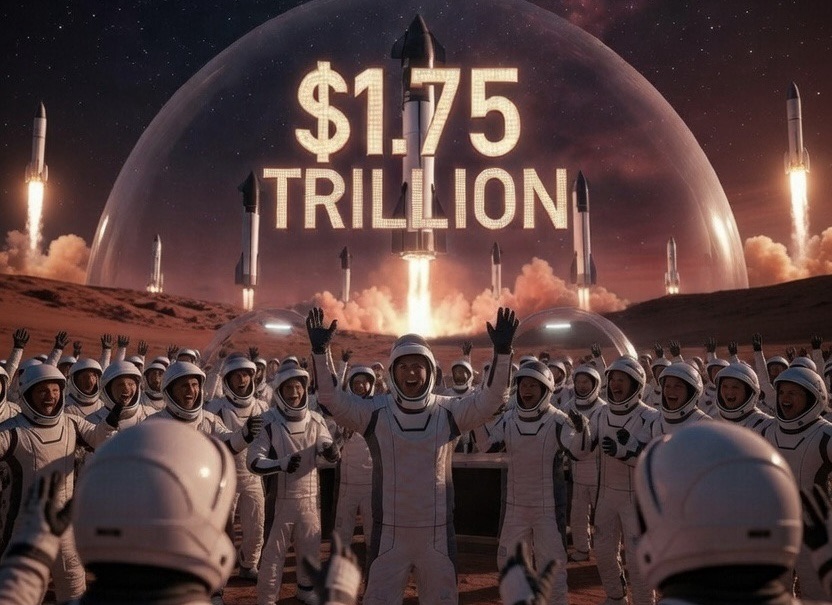
In a bombshell report from Bloomberg on February 27, 2026, Elon Musk’s SpaceX is reportedly eyeing a confidential filing for an initial public offering (IPO) as early as March. This move could pave the way for a public listing by June, potentially at a staggering valuation exceeding $1.75 trillion. If it happens, this would eclipse records set by previous mega-IPOs like Saudi Aramco and position SpaceX among the world’s most valuable companies—surpassing giants like Meta and even Tesla in market cap.
SpaceX has long been one of the most coveted private companies on Earth. Founded in 2002 with the audacious goal of making humanity multi-planetary, it has transformed from a scrappy rocket startup into a powerhouse dominating reusable launches, satellite internet, and NASA partnerships. But going public? That’s a shift Musk has resisted for years, citing the distractions of quarterly earnings pressure. So why now?
The Road to IPO
Recent developments have accelerated the timeline. In February 2026, SpaceX merged with Musk’s AI venture xAI in a deal valuing the combined entity at around $1.25 trillion (SpaceX at ~$1 trillion, xAI at $250 billion). This fusion integrates advanced AI capabilities—think space-based data centers and smarter Starship operations—supercharging growth prospects.
Prior secondary share sales pegged SpaceX at roughly $800 billion in late 2025, but momentum has been relentless. Starlink, the company’s satellite broadband network, continues to explode in subscribers, generating steady revenue while funding ambitious projects like Starship’s “insane flight rate,” lunar bases, and Mars colonization.
A confidential filing in March would allow SpaceX to submit draft registration to the SEC quietly, avoiding immediate public scrutiny while preparing for a full debut. Sources indicate the IPO could raise tens of billions—potentially up to $50 billion—making it the largest listing in history.
The Eye-Popping Valuation
At over $1.75 trillion, SpaceX would rank in the top tier globally, behind only a handful of tech behemoths like Nvidia, Apple, Microsoft, Alphabet, and Amazon. This isn’t just hype; it’s built on real fundamentals:
- Reusable rockets slashing launch costs dramatically.
- Starlink’s global internet dominance, especially in underserved regions.
- Government contracts (NASA, DoD) providing reliable cash flow.
- Synergies with xAI for AI-driven space tech.
Analysts see this as achievable if Starship succeeds at scale and Starlink hits profitability milestones. Still, it’s ambitious—doubling from recent private valuations in months.
What It Means for Investors and the Market
For retail investors, the FOMO is real. A SpaceX IPO would open the floodgates: everyday people could finally own a slice of the company that’s literally shooting for the stars. Expect massive oversubscription, server-crashing demand, and wild post-IPO volatility—classic Elon-style.
Broader implications? It could kick off a wave of mega-IPOs in 2026, including AI players like OpenAI and Anthropic. Capital markets would shift toward frontier tech, drawing billions into space, AI, and beyond.
But risks loom: regulatory hurdles, execution on Starship, competition from Blue Origin or China, and Musk’s unpredictable leadership style. Public markets demand transparency, which might clash with SpaceX’s secretive, long-term vision.
Conclusion
SpaceX considering an IPO isn’t just corporate news—it’s a milestone for humanity’s space ambitions. From Falcon 1 failures to Starship prototypes and Starlink constellations, the company has defied skeptics. A $1.75+ trillion public debut would cement it as one of the defining companies of our era.
Whether you’re bullish on Mars or cautious about valuations, one thing’s clear: Elon Musk is once again rewriting the rules. The stars feel closer than ever. 🚀
What do you think—will SpaceX deliver the biggest IPO ever, or is this peak hype?
Related posts:
 How Elon Musk Pushed Technology a Decade Ahead
 Meta–Nvidia AI Deal Explained (2026): Billions, Blackwell GPUs & Meta’s AI Future
 Sundar Pichai Meets Narendra Modi: What the February 18, 2026 Meeting Means for India’s AI and Tech Future
 Nvidia’s Big Bet on India: The $2 Billion AI Investment and What It Means
 Nvidia Backs Wayve in $1.2 Billion AI Self-Driving Push
 India’s AI Boom: World’s Fastest-Growing AI Consumer — But Are We Building or Just Using?
Anthropic AI Shock: Why Indian IT Stocks Crashed
India’s AI Boom: World’s Fastest-Growing AI Consumer — But Are We Building or Just Using?
Anthropic AI Shock: Why Indian IT Stocks Crashed
 Nvidia Delivered Incredible Quarterly Results — But Why Did the Stock Slip?
 🌍 Iran Attack Today Sends Shockwaves Through Crypto Markets
Claude in Crisis? Mexico Flags Major AI Data Concerns
🌍 Iran Attack Today Sends Shockwaves Through Crypto Markets
Claude in Crisis? Mexico Flags Major AI Data Concerns