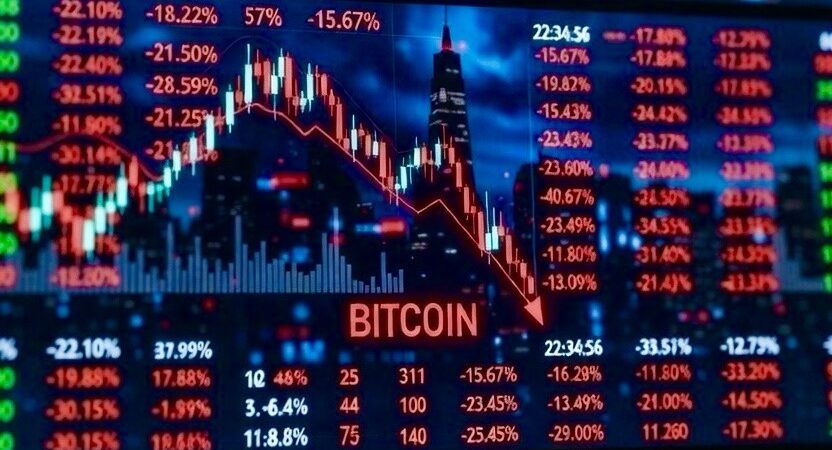
Bitcoin slipped sharply today as geopolitical tensions intensified and global markets flipped into risk-off mode. With uncertainty rising around developments involving Iran, investors rushed to reduce exposure to volatile assets — and crypto felt the impact immediately.
Let’s unpack what happened, whether the fall could continue, and what a prolonged war scenario might mean for Bitcoin.
What Triggered Today’s Drop?
1️⃣ Geopolitical Shockwaves
Fresh escalation fears tied to Iran rattled global markets. In moments like this, capital typically rotates out of high-volatility assets and into perceived safety such as cash, bonds, or gold.
Despite its “digital gold” narrative, Bitcoin still behaves like a high-risk asset during sudden macro shocks.
2️⃣ Traditional Markets Turned Red
When major indices like the S&P 500 decline, crypto often mirrors the move. Institutional investors now treat Bitcoin as part of broader portfolio allocation strategies. If they cut equity exposure, crypto allocations frequently shrink as well.
Liquidity tightening across markets puts pressure on speculative assets first — and Bitcoin sits at the top of that list.
3️⃣ Leverage Liquidations
Crypto markets are heavily leveraged. Once key support levels break, automatic liquidations cascade through exchanges. Long positions get wiped out, forcing additional selling and accelerating downside momentum.
This creates a snowball effect that exaggerates price moves.
4️⃣ Dollar Strength
During global uncertainty, money flows toward the U.S. dollar. A stronger dollar typically weighs on Bitcoin since BTC is priced in USD. When the dollar index rises, demand for alternative assets can weaken.
Will Bitcoin Continue Falling?
The direction from here depends largely on macro developments.
Scenario A: De-Escalation
If tensions ease and diplomacy prevails, markets could rebound quickly. Bitcoin has historically staged sharp recoveries after panic-driven selloffs. Relief rallies in crypto are often fast and aggressive.
Scenario B: War Expands
If conflict spreads or energy supply chains are disrupted, the pressure could persist.
Here’s what prolonged conflict would likely bring:
➤ Oil prices climbing higher
➤ Inflation expectations rising again
➤ Central banks delaying interest rate cuts
➤ Equity markets remaining volatile
➤ Risk assets, including Bitcoin, staying under short-term pressure
That combination is not immediately bullish.
Is Bitcoin a Risk Asset or a Safe Haven?
This debate resurfaces during every geopolitical crisis.
In the short term, Bitcoin behaves like a tech stock — reactive and volatile. But over longer periods of instability, its core properties become more relevant:
➤ Borderless transactions
➤ Censorship resistance
➤ Limited supply
➤ Independence from central banks
If war leads to sanctions, capital controls, or banking restrictions, crypto adoption in affected regions can accelerate.
The initial reaction is usually bearish. The structural narrative may strengthen later.
What If War Continues?
If geopolitical tensions involving Iran escalate further, markets could remain fragile.
Short term outlook:
➤ Liquidity tightens globally
➤ Investors reduce risk exposure
➤ Volatility spikes
Long term possibility:
➤ Rising distrust in fiat systems
➤ Increased cross-border crypto demand
➤ Stronger Bitcoin hedge narrative
The first wave is fear. The second wave depends on how the global financial system reacts.
Final Take
Today’s Bitcoin drop appears driven more by macro uncertainty than by crypto fundamentals. Markets dislike unpredictability, and war headlines create exactly that.
Whether this becomes a temporary shakeout or the start of a deeper correction will depend on:
➤ Geopolitical developments
➤ Institutional ETF flows
➤ Dollar strength and bond yields
➤ Overall stock market direction
Volatility is guaranteed. Direction is conditional.
(Image generated by Grok)
Related posts:
 🌍 Iran Attack Today Sends Shockwaves Through Crypto Markets
 Will Gold and Silver Surge as Iran–Israel Tensions Intensify?
 The Strait of Hormuz Crisis: How a Geopolitical Flashpoint Is Shaking Global Financial Markets
Anthropic AI Shock: Why Indian IT Stocks Crashed
The Strait of Hormuz Crisis: How a Geopolitical Flashpoint Is Shaking Global Financial Markets
Anthropic AI Shock: Why Indian IT Stocks Crashed
 SpaceX’s Potential IPO: The Dawn of a Trillion-Dollar Space Era?
 Nvidia Delivered Incredible Quarterly Results — But Why Did the Stock Slip?
 India’s AI Boom: World’s Fastest-Growing AI Consumer — But Are We Building or Just Using?
 Sundar Pichai Meets Narendra Modi: What the February 18, 2026 Meeting Means for India’s AI and Tech Future
Nvidia Backs Wayve in $1.2 Billion AI Self-Driving Push
Sundar Pichai Meets Narendra Modi: What the February 18, 2026 Meeting Means for India’s AI and Tech Future
Nvidia Backs Wayve in $1.2 Billion AI Self-Driving Push
 How Elon Musk Pushed Technology a Decade Ahead