

In a move that has reignited fears and debates about artificial intelligence replacing human jobs, Block (formerly Square) reportedly cut nearly half of its workforce. CEO Jack Dorsey made headlines by openly acknowledging what many leaders have been quietly thinking: AI driven efficiency will reshape hiring and firing decisions across industries.
The announcement has triggered a broader conversation about the future of white collar work in 2026.
📉 Why Block Made the Move
Block’s restructuring was not framed as a financial emergency but rather as a strategic pivot toward becoming what Dorsey described as a leaner, more “intelligence-native” company with AI at its core. The company will shrink from over 10,000 employees to under 6,000, meaning around 4,000 roles will be eliminated. Critics and supporters alike agree that this is one of the most high-profile layoffs explicitly tied to artificial intelligence efficiency gains, not just business performance.
📲 Jack Dorsey’s X Post
Here’s the actual post from Dorsey’s official X account announcing the decision.
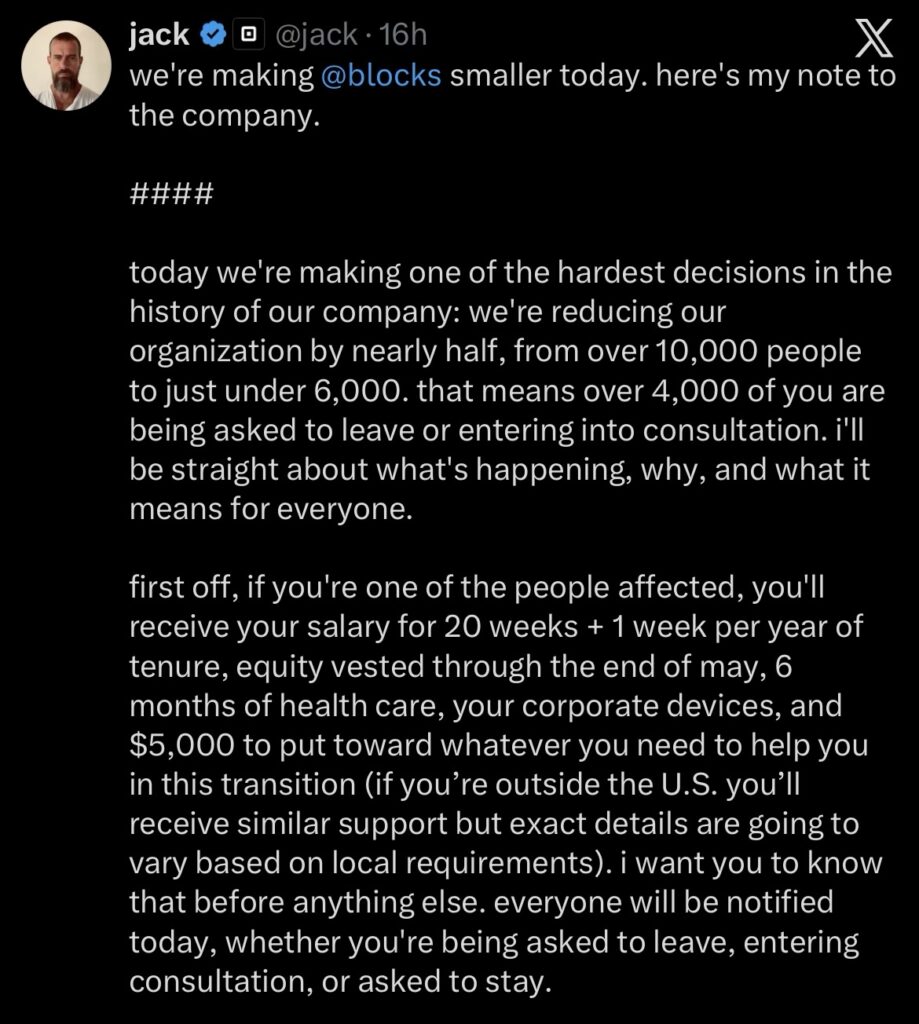
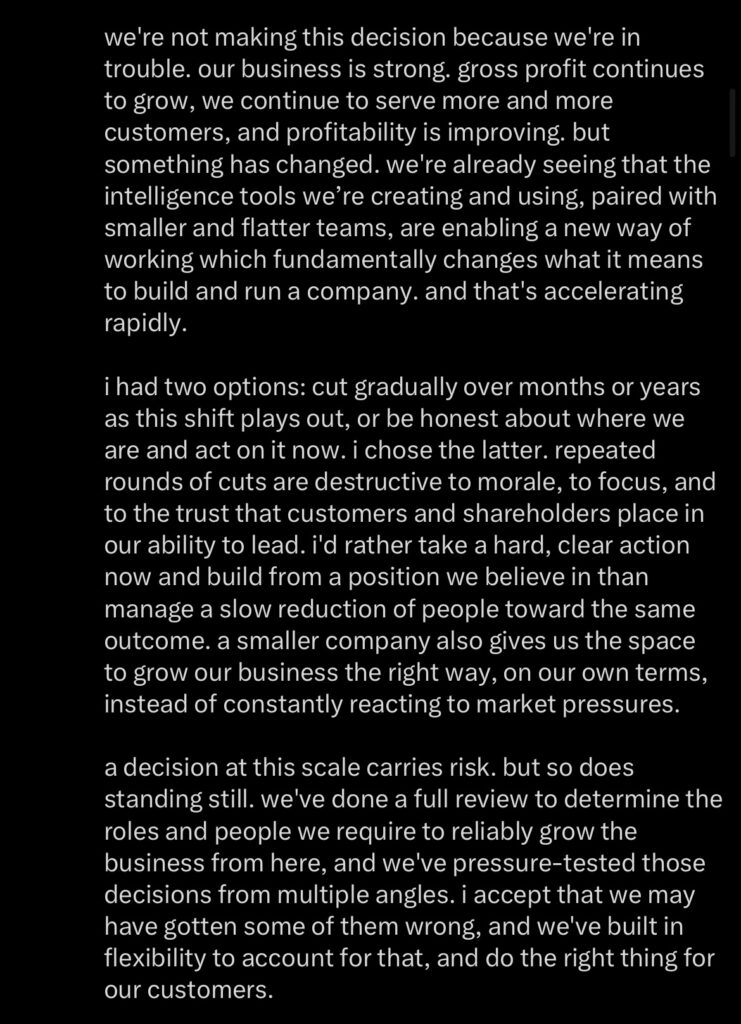
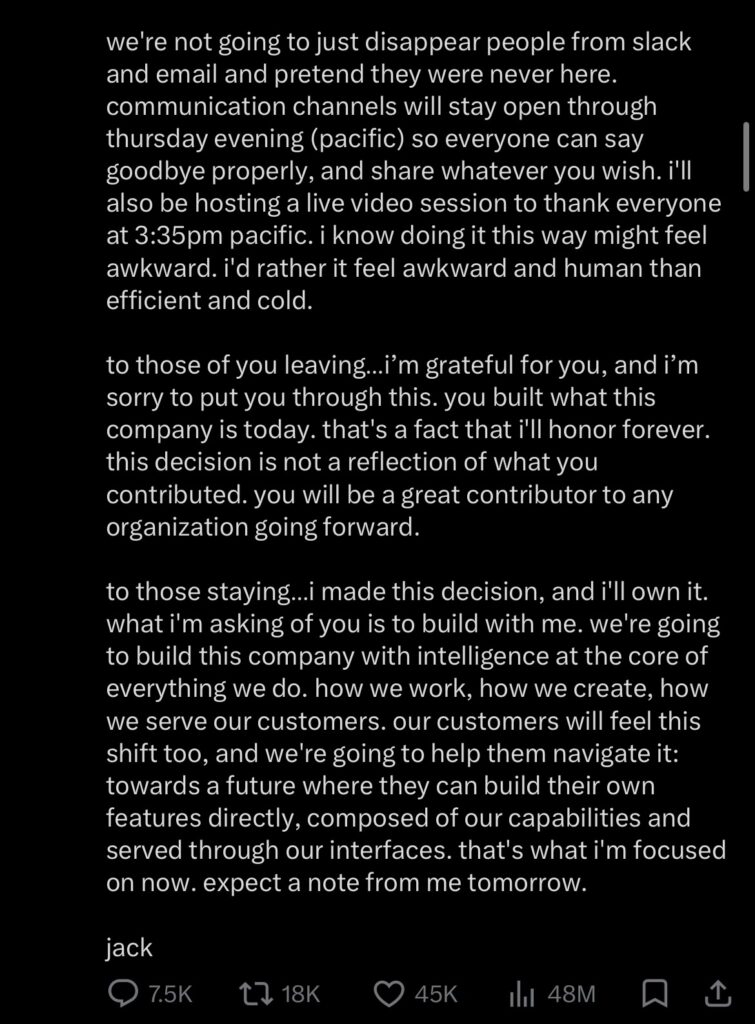
This blunt message underscores Dorsey’s framing that the layoffs are strategic, not a sign of corporate distress — a sentiment echoed in official shareholder letters and analyst commentary.
🤖 The Bigger Picture: AI vs White Collar Jobs
AI systems today are capable of many tasks that once required specialized human workers — drafting complex reports, automating customer interactions, generating code, interpreting data trends, and even assisting with HR decisions. This puts pressure on roles traditionally considered safe: analysts, developers, managers, marketers, and more.
Dorsey himself suggested that many firms could soon face similar decisions, as AI tools reshape workflows and expectations for organizational efficiency.
📊 Why This Matters Beyond One Company
When a high-visibility tech firm makes such a dramatic cut, it sends broader signals:
• Investors may expect similar AI-driven moves across other public companies.
• Executives may feel pressure to rationalize headcount in an AI-enhanced world.
• Workers may rethink skill priorities and career longevity.
This psychological shift — not just the job losses themselves — may shape labor markets long after the headlines fade.
⚖️ Efficiency vs Responsibility
While leaner operations and higher margins can benefit shareholders, critics argue that rapid AI-driven downsizing raises tough questions:
• Are companies investing enough in retraining displaced workers?
• Will new AI-augmented jobs offset the losses?
• What happens to income inequality if automation primarily benefits capital?
History shows that technological revolutions both create and destroy roles. The real test in 2026 will be whether the transition is managed responsibly or simply endured chaotically.
🔮 What Happens Next
Block’s workforce reduction likely won’t be an isolated incident. Many firms are already exploring:
• AI-augmented teams
• Automation-first hiring policies
• Reduced entry-level hiring
• Rewriting job descriptions around AI tools
If this trend accelerates, global corporate staffing may look very different within a few years.
🧠 Final Thoughts
Block’s dramatic cuts are more than a company-specific restructuring — they may mark a pivotal moment in how corporations view human labor. AI isn’t just changing how work gets done. It’s changing who does the work.
The key question now:
Will companies use AI to empower human talent or to replace it?
2026 might be the year we find out.
If you’d like, I can also produce social media snippets or pull quotes from the blog — just let me know!
Related posts:
 WiFi That Can See Through Walls? Inside the WiFi-DensePose Technology
 A Robot That Can Clean Your House: Figure AI Helix 02 Humanoid Robot Explained
 Best Laptops Under ₹60,000 for Coding (2026)
 Anthropic AI Shock: Why Indian IT Stocks Crashed
 India’s AI Boom: World’s Fastest-Growing AI Consumer — But Are We Building or Just Using?
 MacBook Neo Is Here: Apple’s Most Exciting Budget Laptop of 2026
 Sundar Pichai Meets Narendra Modi: What the February 18, 2026 Meeting Means for India’s AI and Tech Future
 Nvidia Delivered Incredible Quarterly Results — But Why Did the Stock Slip?
 New MacBook Air and MacBook Pro 2026: M5 Power Redefines Performance and Efficiency
 🔥 Top 5 Phones Under ₹20,000 for Gaming in 2026